The Weird Reasons Your Cat Keeps Chewing Your Hair at Night
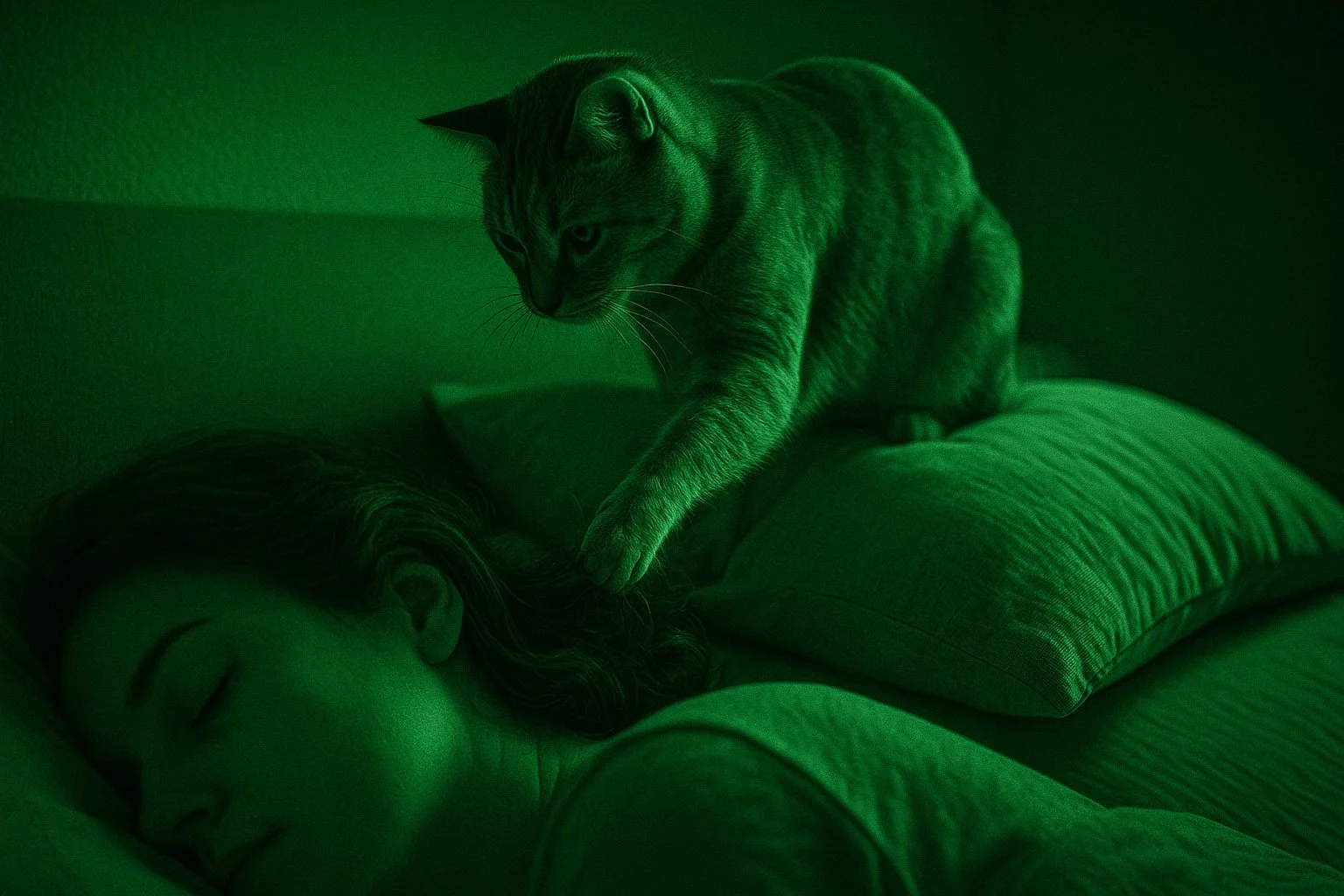
Best Pet Daily - Could tonight be the night your cat decides your hair is a chew toy? (Pic: Digital Artistry)
If you’ve ever shot awake at 3am because your cat has decided your hair is tonight’s chew toy, congratulations — you’re officially part of a very confused, very sleep-deprived global club. Cat parents everywhere share the same peculiar experience: drifting into peaceful dreams only to feel a sandpapery tongue, tiny teeth, or the determined tug tug tug of hair being “harvested” from their scalp.
Yes, it’s weird.
Yes, it’s startling.
And believe it or not, science really does have an explanation.
Before you chalk it up to a nutritional emergency, a secret feline ritual, or a personal vendetta against your shampoo, let’s break down the surprising reasons behind your cat’s midnight hair obsession.
If strange feline behaviour (and misbehavior!) fascinates you, you might also enjoy our guide to feline faux pas (and how to sort them).
1. Is My Cat Eating My Hair… or Just Grooming Me?
First things first: what is your cat actually doing?
Some cats lick your hair — affectionate, if a bit damp.
Some cats chew your hair — tiny, nibbling bites.
A select few go full bite-and-yank, like your fringe is a stubborn weed.
A grooming lick is soft, repetitive and rhythmic.
Chewing, on the other hand, involves quick little nibbles with the front teeth and a surprisingly serious expression.
The “You Smell Interesting” Theory
Cats explore the world through scent and taste. Your hair might smell like:
Shampoo
Your pillow
Sweat and skin
The great outdoors
Sometimes they’re not trying to eat you — they’re just curiously sampling your “flavour profile.”
2. The Grooming Instinct: Your Cat Thinks You’re Family
One of the most common explanations is also one of the sweetest: allogrooming. This is the social grooming behaviour cats use with family and bonded companions.
To dive deeper into this, visit why cats groom their humans.
When your cat grooms your hair, they may be saying:
“You’re part of my group.”
“I trust you.”
“You are mine.”
If your hair smells “wrong” to them — like unfamiliar perfume, sweat or outside odours — they may be trying to “fix” it and return you to your normal, comforting scent.
3. The Sensory Fascination: Your Hair Is a Cat Toy
Your hair is long, flexible, moves when you do and smells interesting. To a cat, that’s basically a deluxe enrichment item
Scent and Texture
Cats may be drawn to:
Floral, fruity or herbal shampoos
The salty scent of skin and sweat
The soft, string-like texture of hair
Long hair can resemble grass, string, prey tails or their favourite toys. And when you’re lying still, it’s all right there within reach.
4. Emotional Reasons: Love, Comfort and Night Rituals
Not every hair-chewing episode is about scent or texture. Sometimes, it’s about feelings.
Cats often groom those they feel safest with. Night-time offers:
A quiet house
A relaxed human
A predictable routine
So your cat may use that time to express affection or seek comfort. Hair-chewing can sit alongside kneading, blanket sucking or curled-up purring as part of their self-soothing toolkit.
If your cat shows multiple signs of stress, have a look at cat anxiety signs.
5. Attention-Seeking: The “Wake Up, Human” Strategy
Sometimes, the explanation is brutally simple: it works.
Cats are brilliant at noticing cause and effect. If:
Chewing your hair wakes you up
Waking you up leads to food, cuddles or play
… then hair-chewing becomes a very effective communication tool.
6. When Hair-Chewing Could Be a Problem
Most of the time, this behaviour is more odd than dangerous. But there are a few red flags to watch for.
Pica: Eating Non-Food Items
If your cat isn’t just chewing but actually swallowing your hair, it could indicate pica — a condition where pets eat non-food items like fabric, plastic, wool, or hair
Nutritional Factors
Sometimes, unusual cravings can hint at diet issues, such as low fibre or other imbalances. It doesn’t mean your cat is deficient because they lick your fringe — but it can be a cue to consider their overall diet and wellness.
For a bigger-picture view of prevention and wellbeing, read Secrets To A Longer, Happier Life For Your Pet.
Anxiety or Boredom
Indoor cats in particular may develop oral-fixation behaviours when they’re under-stimulated or stressed. If hair-chewing comes with restlessness, over-grooming or destructive behaviour, more enrichment may help
7. Is It Dangerous for You?
In most cases, it’s more gross than dangerous. But there are a few things to consider:
Cat saliva on sensitive skin can cause irritation or mild reactions.
If you have eczema, dermatitis, or skin sensitivities, you might notice itchiness where your cat has been grooming.
If you’re trying to work out whether a reaction is serious, our Pet Symptom Identification hub is a good place to start.
It’s also sensible to discourage your cat from licking your eyes, nose or mouth — it’s simply a better hygiene practice for both of you.
8. Is It Dangerous for Your Cat?
Grooming your hair isn’t usually a big problem. Swallowing your hair can be.
Hairballs and Gut Issues
Human hair is thicker and longer than normal cat fur, and it doesn’t break down. That can mean:
Larger hairballs
More frequent vomiting
In rare cases, gastrointestinal blockage
Read more about these issues in Common Cat Illnesses.
If your cat is vomiting frequently, straining in the litter box, off their food or lethargic, it’s worth getting advice. Our article Pet Symptoms Causing Worry? Get Help Quickly With Online Vets explains how telehealth vets can help you triage what’s urgent and what’s not.
9. How to Stop (or Redirect) the Hair-Chewing Habit
If you love your cat but value your sleep (and your hair), you can gently redirect this behaviour.
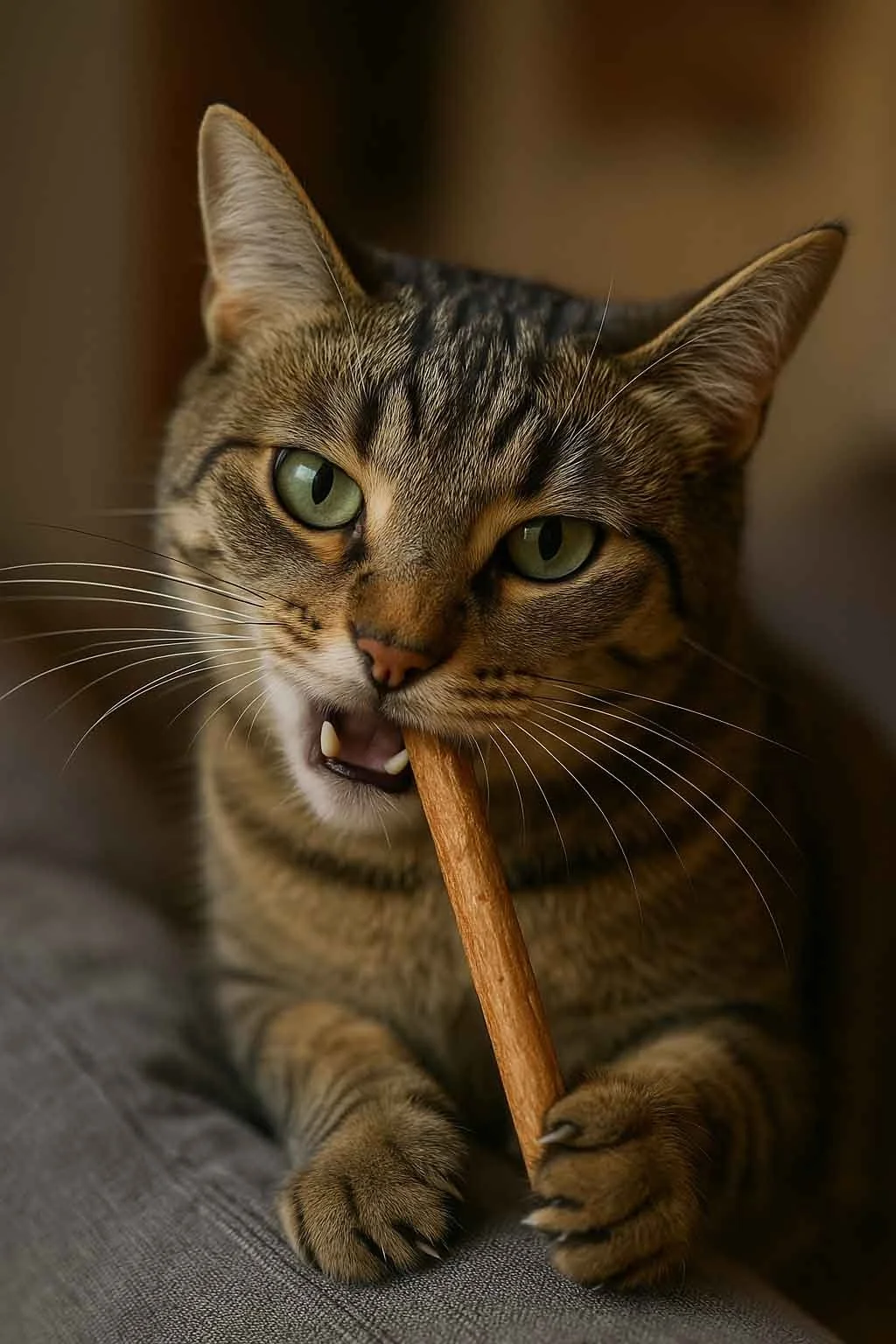
Best Pet Daily - A chew toy can prove a good decoy for hair chewing (Pic: Digital Artistry)
Offer Alternative Chew Items
Before bed, offer:
Dental chews
Safe chew toys
Food puzzles or lick mats
Adjust the Evening Routine
A high-energy cat may chew hair simply because they haven’t burned off enough steam. Add 5–10 minutes of play and some mental stimulation in the evening.
The more you understand their emotional needs, the easier this becomes.
Teach a Gentle “No” Cue
You don’t need to yell or punish. Instead:
Gently move your cat away.
Use a calm, consistent phrase (like “No kisses”).
Redirect them to a toy, chew or a different cuddle position.
Praise or reward when they settle somewhere else.
Over time, they learn that hair-chewing doesn’t get the reaction, but calm cuddles do.
Experiment With Shampoo
Some cats really do seem drawn to particular scents. If your cat becomes more intense after you use a specific shampoo or product, switching to a milder or unscented option could help.
10. Practical Night-Time Strategies to Protect Your Sleep
If you’re done with 3am “salon appointments,” try:
Wearing your hair in a bun or braid at night
Using a silk or satin sleep cap
Giving your cat a cosy bed or heated pad near (but not on) your pillow
Closing the bedroom door if needed (yes, the drama will be real… but temporary)
… and just generally, more enrichment during the day and evening.
11. Cat Psychology Corner: What This Says About Your Bond
If your cat is chewing or grooming your hair, there is one very clear message underneath it all: you matter to them.
You’re not just furniture; you’re part of their social group. Grooming is a sign of trust, comfort and connection.
12. Myth-Busting: No, Your Cat Isn’t Trying to Eat You
Let’s clear up a few myths:
They’re not practising hunting on your head.
They’re not trying to consume you for protein.
They’re probably not angry at your hairstyle.
They’re not plotting anything sinister.
They’re just… being cats.
13. Final Verdict: Cute, Weird and (Mostly) Harmless
If your cat:
Licks
Nibbles
Gently chews
“Styles” your hair a little at night
…it’s usually a mix of bonding, curiosity and comfort.
If your cat is regularly swallowing hair or showing signs of vomiting, constipation, or discomfort, that’s when to intervene and possibly seek vet advice. Our article Pet Symptoms Causing Worry? Get Help Quickly With Online Vets can help you decide what to do next.
Underneath the weirdness, hair-chewing is often just your cat’s odd little way of saying:
“I love you. You’re mine. Also, your shampoo is fascinating.”
14. FAQs
1. Why does my cat only chew my hair at night?
Night-time is when you’re still, quiet and easy to reach. Your cat may feel safest and most affectionate then, so grooming and bonding behaviours tend to show up while you’re asleep.
2. Is hair-chewing more common in kittens?
Yes. Kittens explore with their mouths and may chew hair, fabric and other textures. Many grow out of the intense phase, but some keep the habit into adulthood.
3. Why does my cat chew my beard instead of my hair?
Your beard is just another interesting, textured, scented patch of “you”. The same principles apply: scent, texture, curiosity and bonding.
4. Could this be a sign my cat is stressed or bored?
Sometimes, yes. If hair-chewing appears alongside over-grooming, restlessness, clinginess or destructive behaviour, it can be a sign of stress or under-stimulation. Read up on our Top-100-stress-triggers-for-your-cat-how-to-avoid.
5. Is it ever okay to just let them keep doing it?
If your cat is not swallowing hair, not causing you skin irritation, and not disturbing your sleep too much, you may decide it’s an odd but acceptable quirk. Just keep an eye on hairballs, vomiting or changes in behaviour, and speak with a vet or an online vet if you’re unsure.